
Hearing impairment in adults most often develops gradually and may remain unnoticed for a long time. Due to the absence of pain and the ability to adapt to changes, people often seek medical help only when the disorder becomes persistent and the possibilities for full recovery are limited.
More than 1.5 billion people worldwide experience some degree of hearing problems, and about 430 million require medical or technical rehabilitation. By 2050, this number may exceed 700 million, according to the World Health Organization. In Ukraine, more than 2 million people live with hearing impairments, according to the Ministry of Health data for 2022. However, in the context of war, the risks continue to increase daily. Despite the lack of updated statistics, doctors note that hearing decline is increasingly being diagnosed in young and working-age individuals.
Who is at risk and how to recognize the problem in time — we explore in this article.
The Difference Between Hearing Impairment and Hearing Loss
Hearing deterioration does not always mean permanent loss. Sometimes it is temporary — after infections, fatigue, or exposure to loud noise — and gradually resolves. However, if the changes persist and progress, it becomes a chronic condition that requires attention. Hearing loss is diagnosed when a person cannot hear soft sounds with both ears.
Mild hearing decline makes it difficult to understand speech in noisy environments and to perceive quiet or high-frequency sounds. With moderate hearing loss, people often need to increase the volume of their phone or television and frequently ask others to repeat themselves. Severe impairment means sounds can only be heard at close range, while profound loss is almost a complete inability to perceive sounds without special devices.

Age-Related Hearing Changes: Presbycusis as a Physiological Process
One of the most common causes of hearing decline in adults is presbycusis — age-related hearing loss associated with the natural aging of the auditory system.
This process includes:
- gradual loss of sensitive cells in the inner ear;
- impaired blood supply to the auditory nerve;
- reduced ability of the brain to process sound information.
Clinically, presbycusis manifests as reduced speech clarity, especially in noisy environments, difficulty perceiving high frequencies, and symptoms such as tinnitus — a persistent ringing or buzzing in the ears.
Pathological Causes of Hearing Impairment
Hearing deterioration in adults is not always the result of aging. It is often caused by diseases affecting the auditory nerve and the inner ear. Acute and chronic inflammation, complications after infections, and circulatory disorders can reduce sound clarity and make speech comprehension more difficult, especially in noisy settings.
External factors also play an important role. Prolonged exposure to loud noise, head injuries, or ear trauma can damage the sensitive cells of the inner ear, which do not regenerate. In wartime conditions, the risks increase significantly: explosions, gunfire, and air raid alarms may cause acoustic trauma, sudden hearing loss, or persistent tinnitus. Chronic stress in such conditions further worsens the situation and complicates recovery.
Certain medications with ototoxic effects may also negatively impact hearing. Genetic predisposition, metabolic disorders, and autoimmune conditions increase the vulnerability of the inner ear. Therefore, hearing decline can sometimes develop gradually even without obvious trauma or excessive noise exposure.
Hearing Diagnostics
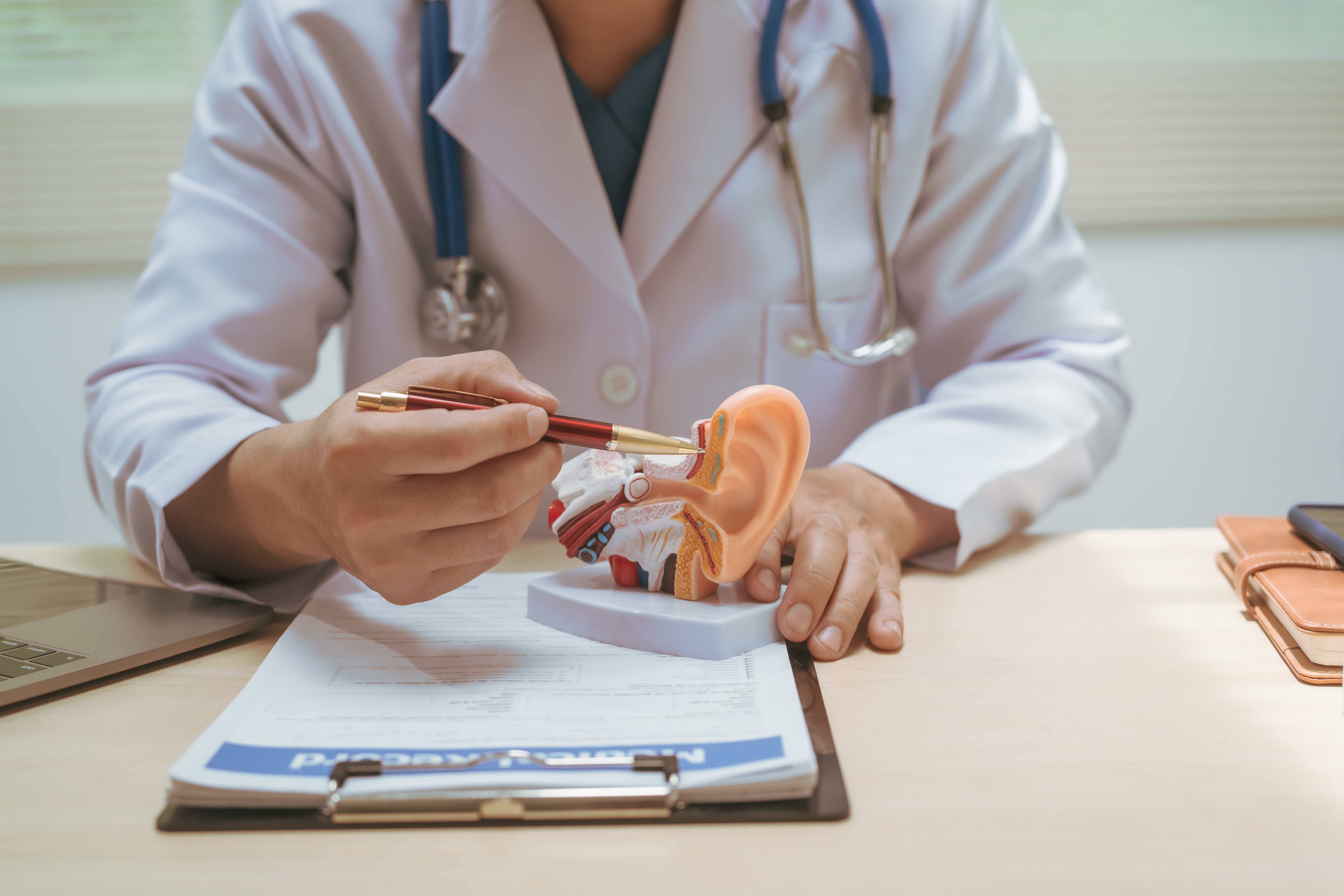
If hearing impairment is suspected, an objective examination by an ENT specialist or audiologist is essential. The primary method is audiometry, which determines which sounds a person can hear at different frequencies. The results are recorded in the form of an audiogram, allowing specialists to assess the degree and type of hearing loss.
Impedance audiometry may also be performed to evaluate the condition of the middle ear and rule out inflammation or certain mechanical causes.
If a patient reports hearing loss in one ear, each ear is examined separately. Sudden unilateral hearing loss requires immediate medical consultation.
Diagnostic results determine the further approach — treatment, monitoring, or selection of hearing rehabilitation devices. The treatment strategy depends on the cause and severity of the changes. That is why, after diagnosis, the doctor decides whether hearing can be restored medically or whether it is a permanent loss requiring special attention.
Modern Features of Hearing Devices
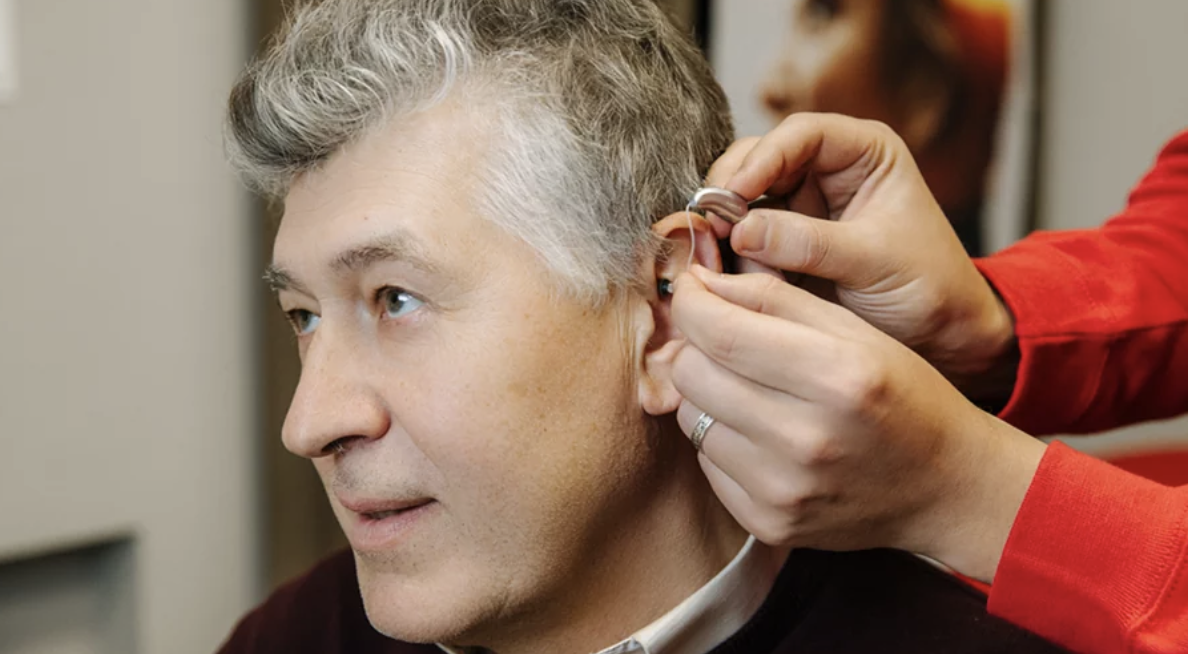
Today’s hearing aids differ significantly from those available just a few years ago. Most modern models operate using artificial intelligence algorithms: they reduce background noise and enhance speech, making it easier to understand conversation in public transport or crowded places. Directional microphones capture the voice in front of you, and the system automatically adapts to different environments — from a quiet room to a busy street.
Many devices connect via Bluetooth to smartphones, televisions, or computers, and settings can be adjusted through a mobile application. Some functions enhance quiet speech in calm environments, reducing the need to ask others to repeat themselves.
At the same time, it is important to understand that no device fully restores hearing; it only compensates for the loss. Hearing involves not only the ear but also the brain. After prolonged hearing decline, a person needs time for adaptation and auditory rehabilitation. The combination of a properly fitted device and professional support is what leads to meaningful results.
Prevention of Hearing Deterioration
A significant proportion of hearing loss cases are predictable and preventable. According to leading international experts, up to 50% of cases can be avoided through safe sound practices, control of noise exposure, workplace hearing protection, and responsible use of medications.
The editorial team of MED+ spoke with audiologist and hearing care specialist Vadym Shevchenko from Cor-Sound. He provided several recommendations for preventing hearing deterioration.
- Prolonged noise exposure above 85 dB — such as in industrial settings, at concerts, or through headphones at maximum volume — gradually damages the receptors of the inner ear, whose cells do not regenerate. Therefore, it is important to use earplugs or protective headphones and avoid listening to music at full volume. It is also advisable to take “quiet breaks” — 12 to 24 hours without excessive noise after loud exposure — to allow hearing to recover and rest.
- Some medications have ototoxic effects and may negatively affect hearing. They should only be taken as prescribed by a doctor and under medical supervision.
- Arterial hypertension, diabetes, and circulatory disorders also affect the auditory nerve. Maintaining stable blood pressure and controlling blood sugar levels are part of hearing loss prevention.
- After the age of 50, hearing should be checked every 1–2 years, even without symptoms. If tinnitus appears, speech becomes difficult to understand, or hearing suddenly disappears in one ear, immediate examination is necessary.

Prevention does not guarantee that age-related presbycusis will not develop at all, but it helps reduce risks and avoid missing the moment when treatment is most effective.
The main rule is simple: hearing is a resource that is easy to lose and difficult — sometimes impossible — to restore. It is better to protect it in advance than to treat the consequences later.